Research
Tologonov Azim Kuralbekovich
Research
161 | 0 | 1
Innovations in traffic and parking management
Abstract: Relevance of the chosen topic is indisputable in the context of rapid urbanization and increasing automobile traffic. The city has witnessed a significant rise in the number of vehicles on roads, leading to congested transportation networks and parking problems. Consequently, it becomes imperative to introduce innovative approaches in traffic and parking management to ensure more efficient utilization of available resources and improve the urban environment quality. Implementation of smart technologies, adaptive traffic control, electronic parking systems, and other innovative solutions can substantially enhance traffic flow and parking resource management, making the city more accessible and convenient for residents and visitors. Thus, studying and implementing innovative traffic and parking management methods represent a crucial task for enhancing urban infrastructure and improving the quality of life in Bishkek. Keywords: Urbanization, Vehicle traffic, Transport infrastructure, Parking, Innovative approaches, Smart technologies, Adaptive management, Electronic parking systems,Improvement of urban environment quality, Quality of life
Tunkatarova Kymbat Edilbekovna
Research
223 | 0 | 1
Problems of urban public transport development
Abstract The relevance of this article is extremely high, as the development of urban transport is currently associated with urbanization processes, transportation challenges, environmental concerns, and economic benefits. This article examines the problems faced daily by drivers of urban public transport, including road congestion, poor road conditions, and the lack of dedicated public transport lanes. Due to the insufficient number of buses, trolleybuses, and minibuses, residents are forced to switch to private vehicles and taxis for comfort and safety. As a result, the number of cars in the city increases, leading to heavier traffic congestion. The main focus of this study is to improve the situation and enhance the accessibility and comfort of urban public transport, including the development of new routes and the use of more environmentally friendly transportation modes. Keywords: public transport, passenger flow, road transport infrastructure, traffic congestion, dedicated lanes. Main Part Problems in the development of urban public transport include overloaded routes, lack of vehicles, inefficient route utilization, as well as safety and environmental sustainability issues. Solving these problems requires infrastructure investments, modernization of the vehicle fleet, and the implementation of intelligent technologies for managing transport networks. The Bishkek City Hall is implementing important reforms in transport and road infrastructure. These include the introduction of dedicated public transport lanes, modernization of bus stops, launching new bus routes, and closing certain minibus routes. However, residents have not yet experienced significant improvements: long waiting times and overcrowded vehicles remain common. More than 270 municipal buses, 125 private buses, 120 trolleybuses, and approximately 1,000 minibuses operate daily within the city. Road Condition Problems One of the most serious long-term problems faced by urban public transport drivers is poor road conditions. Low-quality roads increase travel time, accelerate vehicle wear, and raise maintenance costs. As a result, public transport becomes less attractive to passengers who prefer private cars or alternative transport modes. Main causes of poor road conditions: Technical and technological problems; Institutional shortcomings; Regulatory gaps; Outdated legal frameworks. It should be noted that these are only the main contributing factors, and additional issues may exist that have not yet been fully studied or disclosed. Traffic Congestion Problem As more residents shift to private cars and taxis, road congestion continues to increase. Traffic jams and overloaded roads can simultaneously stimulate demand for public transport, as people seek alternative ways to avoid delays and reduce travel-related stress. Measures to reduce congestion: Development of public transport. Improving quality and accessibility reduces the number of private cars on the roads. Demand-based transport planning. Adaptive scheduling and route management help optimize traffic during peak hours. Infrastructure development. Dedicated bus lanes and bicycle paths improve traffic flow and safety. Road expansion. Removal of illegal constructions and expansion of road capacity. A combination of these measures can significantly reduce traffic congestion. City Hall Decision: Implementation of Cashless Payment One of the key decisions made by the Bishkek City Hall was the implementation of cashless fare payment. Starting August 20, 2023, municipal transport began transitioning to a fully cashless payment system. If passengers do not have a “Tulpar” card, the fare is set at: cashless payment — 17 soms, cash payment — 20 soms. Advantages of cashless payments: Passenger convenience. No need to carry cash or search for change. Improved efficiency. Reduced boarding time and fewer vehicle delays. Enhanced analytics. Accurate data collection on passenger trips enables better route planning and optimization. Together, these factors contribute to improving the quality and accessibility of urban public transport, which may increase ridership and support further development. Bishkek Minibuses Why are there so many, yet passengers still cannot use them easily? The quality of private minibus services has been declining, while citizen complaints continue to grow. Minibuses effectively hold a monopoly in passenger transportation. The situation is likely to persist until the number of minibuses is optimized. Most common complaints from residents: Overcrowded minibuses; Dirty interiors; Waiting times up to 40 minutes; Some routes stop operating after 8:00 PM; Lack of service on weekends; Unauthorized route changes; Passengers dropped off before reaching final destinations; Driver rudeness; Dangerous driving; Poor service culture. Currently, Bishkek is served by 103 routes operated by 39 companies. Approximately 2,000 vehicles operate on city roads daily. According to the city transport department, the number of minibuses has decreased by about 800 units over the past one and a half years. However, vehicle distribution across the city remains uneven. About 28 routes operate along Abdrahmanova and Baytik Baatyr streets, around 10 routes pass through Elebesova Street, while the city outskirts remain insufficiently served. Conclusion Significant reduction of traffic congestion, improvement of road infrastructure, and increasing the number of modern buses will create a more comfortable and efficient public transport system, reduce travel time, and improve accessibility for passengers. Replacing minibuses with modern buses could also reduce pollutant emissions, improve urban air quality, and increase overall citizen satisfaction with transportation conditions. Such changes are closely linked to economic development, as efficient public transport increases mobility, improves access to workplaces, enhances tourism infrastructure, and supports business growth within the city. References Rakhmatullina A.R. Problems of Urban Public Transport Development // Management of Economic Systems: Electronic Scientific Journal. – 2013. – No. 12 (60). – p.70. Rakhmatullina, Albina Rustamovna. Problems of Urban Public Transport Development. Management of Economic Systems: Electronic Scientific Journal, 12 (60), 2013. Rakhmatullina, A.R. (2013). Problems of Urban Public Transport Development. Management of Economic Systems: Electronic Scientific Journal, (12 (60)), 70. kaktus.media/doc/395445_marshrytki_bishkeka._pochemy_ih_tak_mnogo_no_passajiry_ne_mogyt_yehat_na_nih.html
Abdyzhaparova Aizhamal
Essay
396 | 0
What Logistics Means to Me
For me, logistics is not just a profession — it is an entire world where everything is interconnected. It is like a huge network of roads through which goods, information, and people move. Logistics helps all of this stay organized, move correctly, and arrive on time. I like that this field has a clear system, yet always requires thinking, analyzing, and searching for the best solution. I chose logistics because I am interested in understanding how the journey of any product is arranged — from the factory to the customer. We often do not even think about how much work stands behind something appearing on a store shelf. Someone plans transportation, calculates timing, handles documents, and ensures that everything arrives without mistakes. This is the work of a logistician — to make sure everything is accurate and punctual. Moreover, logistics is a profession of the future. The world is becoming increasingly global, and every country is connected to others through trade. I want to be part of this system, to participate in international processes, to work with different people and cultures. I am especially drawn to the opportunity to study and work in China — a country where logistics and trade are developed at the highest level. I believe that international logistics is the place where I can fully apply my knowledge and skills. Logistics also brings together many different fields: economics, mathematics, geography, technology, and even psychology. It is impossible to stay in one place here — you constantly have to grow, learn new programs, systems, and methods. In logistics, not only knowledge and planning skills matter, but also human qualities: responsibility, attentiveness, and communication. This field teaches you to think ahead, make decisions, and find order even in the most complex situations. For me, logistics is movement, connection, and development. It gives the opportunity to manage processes that make people’s lives easier and more convenient. I chose this field because I want to be part of the modern world, where so much depends on how well everything is organized. And I believe that I can become the kind of person who easily solves complex problems and contributes to making the world better.
Kubanov Nurzhigit
Essay
374 | 0
Why I Chose Logistics
My name is Nurzhigit, I am 17 years old, and I am a first-year student at the Kyrgyz State Technical University named after Iskhak Razzakov. I study at the Faculty of Logistics. For me, choosing the logistics profession was not just a random decision, but a conscious step toward a future in which I want to realize my abilities, interests, and desire for growth. At school, my favorite subjects were mathematics and physical education. I liked math for its logic and precision, and P.E. because of football — and football, in turn, is about team spirit and movement. In my opinion, these are the qualities a logistician should have. After all, logistics is not only about transport and warehouses but also about the ability to calculate, organize, and make decisions in real time. After 9th grade, I enrolled in a college majoring in “Software for Computing Equipment and Automated Systems.” At that time, I thought IT was the perfect field for a career, since technology is developing rapidly. However, over time I realized that being a programmer is not really for me, because I am an extrovert. Even though I was interested in studying computers and technology, I felt that I lacked communication, dynamics, and hands-on activity. I understood that I wanted to do something more lively and diverse, where not only technology matters but also interaction with people. After finishing college, I started thinking about my future and about who I wanted to become. I decided to talk it over with my parents, sister, and brother. After our conversations, I identified a few possible directions, and one of them was logistics. That’s how I first became interested in logistics. When I learned more about what a logistician does, I realized — this is exactly what suits me. The modern world is impossible to imagine without logistics. Every product we see in a store goes through a long journey from the manufacturer to the customer. And it is logisticians who make this process accurate and uninterrupted. This profession is in demand all over the world, which means it offers broad opportunities for career growth, travel, and international cooperation. For me, logistics is not just a profession but a path that brings together everything that resonates with me: precision, movement, communication, and growth. I believe I have chosen the right direction, and with each day of studying, I become more and more convinced of it.
Sadykov Sadykzhan
Essay
335 | 0
Why I Chose the “Logistics 2+2 with China” Program
When I was choosing my future profession, it was important for me to find a field with strong prospects, international opportunities, and high demand. That’s why I decided to study in the “Logistics 2+2 with China” program. Logistics itself is the heart of any business, and China today is one of the world’s leaders in manufacturing and trade. Combining these two directions gives me a strong competitive advantage. I have always enjoyed planning, organizing, and optimizing processes. Logistics is not just about delivering goods — it is an entire system: routes, warehouses, transport, customs, documents, and deadlines. The success of any company depends on proper logistics. I want to become a specialist who can manage these processes efficiently. The 2+2 program with China attracted me because it offers international experience. Studying two years here and two years in China is a chance to see how logistics works in one of the most advanced countries in this field. China is known for its powerful infrastructure, modern technologies, and massive flow of goods. I want to gain this experience from the inside. This program also helps me learn the Chinese language and understand the culture of doing business. In the future, this will open many opportunities for me. Today, specialists who understand logistics and can work directly with China are in high demand. I see this as a huge advantage and a chance to build an international career or even start my own business. I understand that studying abroad means responsibility, adaptation, and hard work. But I am not afraid of challenges, because I want to grow and become a high-level professional. Logistics is a dynamic and fast-growing field, and the 2+2 program makes it even more interesting and promising. I chose “Logistics 2+2 with China” because it combines practical skills, international experience, language, technology, and strong future prospects. I am confident that this path will give me a solid education and real career opportunities.
Sarlykova Ademi
Essay
325 | 0
Why I chose logistics
Choosing a life path is always a search for one’s own rhythm in the universal symphony of the world. For me, that rhythm — the pulsing nervous system of modernity — turned out to be logistics. My decision to pursue this field may seem unexpected to some, but for me it became a conscious step toward a profession that is, in essence, the architecture of reality. It is not an escape from something, but an immersion into the very essence of how our civilization works — from a morning cup of coffee brought from distant Brazil to the complex supply chains that send satellites into space. I don’t just want to understand these connections — I want to manage them. Since childhood, I have perceived the world around me as a set of lines and flows. We live in a remarkable place, where the majestic ridges of the Tien Shan stand beside the vibrant life of cities like Bishkek. I've watched trucks from China, Russia, and Kazakhstan move along winding mountain roads like blood flowing through arteries. I’ve observed our numerous bazaars which, though seemingly chaotic, actually operate according to their own strict and well-tuned rhythms. Every vendor knows where the goods came from, where they will go tomorrow, and how to find the shortest path to the customer. This is logistics in its most ancient and intuitive form — the art of connecting points. My passion for digital graphics taught me to see structure. Any art project is not just a burst of inspiration. It is a precise plan: from sketching and choosing a palette to working with layers and creating the final render. It is the logistics of creativity: you must ensure the uninterrupted “delivery” of ideas from the mind to the canvas, optimize the “workflow route,” avoid downtime, and ultimately produce the perfect “product.” I realized that building this flawless process brings me as much joy as the final result itself. And I wanted to apply this ability — to see invisible connections and build coherent systems — to something more tangible. And what could be more tangible and important in our global world than the movement of things? Logistics is magic turned real. Ordering a book from across the ocean, having fresh tropical fruits on the table in winter, the operation of massive delivery platforms — all this is possible thanks to the colossal yet invisible work of logisticians. They are the conductors of a giant orchestra in which container ships, trucks, warehouses, and airplanes take the place of violins and cellos. And if the conductor misses a beat, the melody of modern civilization falters. As someone from Kyrgyzstan, this profession holds special meaning for me. Our country is a natural logistics hub, the heart of Central Asia. The ancient Silk Road, which connected East and West, passed exactly through this land. And today, in the era of the new Silk Road and the “One Belt, One Road” initiative, enormous opportunities lie before us. I do not want to be just a witness to this revival. I want to be one of the specialists who turn our geographic position into an economic advantage. To help goods flow through our mountain passes even faster, safer, and more efficiently, bringing prosperity to my homeland. This is not merely ambition — it is a sense of responsibility. I chose logistics because it is a profession where analytical thinking and creativity merge. It is a challenge. It is an opportunity not just to draw beautiful images, but to design beautiful, intelligent systems. Systems that save time and resources and ultimately improve people's lives. When I look at the world map covered with route lines, I don’t just see a diagram. I see a grand canvas — a painting of global exchange. And I no longer want to remain just a spectator. I want to take the brush — or a stylus, if you prefer — and begin creating. To craft not masterpieces of pixels, but masterpieces of efficiency. To transform visible chaos into perfect order. And for me, this is the highest form of creativity.
Bolotbekov Amangeldi
Essay
316 | 0
Why I Chose Logistics
Choosing a profession is one of the most important decisions in one’s life. It shapes not only our future, but also personal development, job satisfaction, and contribution to society. When I thought about my career path, I carefully considered different directions, but eventually, I consciously chose logistics. At first, I doubted whether it was the right choice. I asked myself: “Is it worth pursuing? How promising is it?” But over time, I realized that I had made the right decision. Today I can confidently say that I chose a profession that is not only interesting, but also highly in demand. Logistics is one of the most promising fields in Kyrgyzstan. The country is actively developing its transportation infrastructure: new roads, railway lines, and modernized airports. Cooperation with China has become especially important in recent years, particularly in logistics. The labor market lacks qualified specialists, so skilled professionals in this field are always needed. Moreover, logistics plays a strategic role in national development. The experience of other countries proves that an efficient logistics system can significantly improve the economy, accelerate the flow of goods, and enhance quality of life. I believe that logistics will become a key foundation for development in our country as well, and I hope to contribute to this progress. Working in logistics, I want to participate in building the future of our nation: helping establish transportation connections, optimizing processes, and teaching future generations the importance of supply chain management. I see this profession not just as a job, but as a path for self-realization and meaningful contribution. Thus, my choice is not accidental. Logistics combines potential, demand, and national importance. I am confident that this path will open many opportunities for me and allow me to be part of meaningful changes. A message for those reading this: choosing a profession is important, but not the most important thing in life. As Haruki Murakami said, “Live each day as if it were your last.” Everything will eventually fall into place — the main thing is to walk through this world with a smile. This was Aman — see you soon!
Vlasova Evelina
Essay
441 | 0
Why I Chose Logistics. Logistics Is the Profession of the Future
I can confidently say that I chose the profession of a logistician myself. This choice was not accidental. Back in school, I thought about who I wanted to become and which profession to choose so that it would be interesting, in demand, and beneficial to society. After learning more about logistics, I realized that this was exactly the field in which I wanted to grow. Logistics is one of the most important sectors of the modern economy. It connects production, transportation, trade, and the management of goods and information flows. It is impossible to imagine modern society without logistics. It is logisticians who organize the movement of goods, monitor delivery deadlines, and ensure that everything happens on time and without interruptions. I have always been interested in how all of this works: how routes are planned, how goods from different countries end up on store shelves, and how delivery services operate. I enjoy analyzing, planning, and finding optimal solutions, which is why I believe this profession truly suits me. For me, logistics is a very promising profession. It is constantly evolving and changing along with the world. New technologies are emerging: automated warehouses, electronic cargo tracking systems, delivery drones, and even AI-powered logistics platforms. All of this makes the profession of a logistician modern, in demand, and interesting. I like that in this field you can constantly learn, grow, and move forward. In the future, I see myself working in this profession. I want to become a competent specialist who can organize processes, optimize routes, and find solutions in difficult situations. I understand that this path requires effort, knowledge, and experience, but I am ready to study and work in order to achieve success. I believe that logistics is the profession of the future because it will always be needed as long as production and trade exist. The world is constantly developing, the volume of transportation is growing, and the speed of goods and service exchange is increasing. This means logisticians will always be in demand. I am proud that I chose this profession. For me, logistics is not just a job but an opportunity to be part of something big and important. I am confident that I made the right choice and that in the future I will be able to fulfill myself in logistics. This choice was deliberate because I believe that logistics truly is the profession of the future. It is impossible to imagine the work of any enterprise, store, or online company without logistics. Thanks to logisticians, everything operates smoothly and efficiently: goods are delivered on time, production does not stop, and people receive everything they need. For me, logistics is a very promising profession because it develops every year, and new technologies and career opportunities appear. In the future, I see myself in this profession. I want to become a skilled specialist and work in a large company. I understand that the path will not be easy, but I am ready for it. Logistics is a profession that will always be in demand. I am proud of my choice and confident that I will be able to build a successful and interesting future in this field.
Slanov Saparmurat
Essay
355 | 0
Why I chose logistics?
Choosing a profession is not just a step; it is perhaps one of the most responsible decisions that determines our future. As Confucius said: “Choose a job you love, and you will never have to work a day in your life.” It was with this thought that I once realized that I wanted to connect my life with logistics. For many, logistics is just transportation and warehouses. But for me, it is the art of movement, the science of how to make the complex simple and the impossible possible. I have always been fascinated by the idea of how millions of goods cross countries and continents every day, how thanks to a clear plan and precise calculations the whole world is connected by invisible threads — routes, transport, decisions. I chose logistics because it combines everything that is close to me: analysis, strategy, responsibility, and dynamics. There is no place for boredom here — every day brings new tasks, new routes, new challenges. And in this, I see the true value of the profession. After all, logistics is not just the organization of processes; it is the management of time and space. In addition, I believe that logistics is a profession of the future. The world is changing rapidly, the economy is becoming increasingly global, and it is competent logisticians who allow this complex system to operate without interruptions. As Henry Ford said: “Coming together is a beginning, staying together is progress, working together is success.” This is especially felt in logistics, because the result always depends on teamwork, accuracy, and trust. When I think about my future, I see myself not just as a specialist but as a person who helps the world move forward. I want to be part of this system where every detail matters, where the speed of delivery, the client’s mood, and the company’s success may depend on my decision. This is a great responsibility, but it is precisely what gives meaning to my choice. My path in logistics is just beginning, but I already understand that this is not just a profession; it is a way of thinking, a striving for order in chaos, for efficiency in a world of endless movement. And if one day someone asks me why I chose logistics, I will answer simply — because I want the world to move, and I want to be a part of this movement.
Kasimova Samira
Essay
383 | 0
Why I chose logistics
Logistics is the profession of the future I only recently found out about logistics. I didn't know what this profession was or what it involved. When I learned that logistics is about delivery, planning, and organization, I became genuinely interested. I didn't realize that there was a whole system behind the simple act of delivering goods, where everything had to be meticulously planned. Then I started learning more. I became curious about where logistics professionals work, what they do every day, and why this profession is considered important. I realized that a logistics professional is someone who holds significant influence. He must be able to plan, think through routes, monitor deliveries, and solve different situations. This is not just a job, but a responsibility and the ability to think quickly. The more I learned about it, the more I realized that this is what I want to do. There's no monotony in logistics; every day can be different. Sometimes you need to find the most efficient delivery route, and sometimes you have to solve problems when things don't go according to plan. I also like that logistics is all about movement. Everything around us—food, clothing, and technology—passes through the hands of logistics professionals. Without them, nothing would work the way it does today. Even when we order something online, there's a whole chain of people involved, with a logistics specialist at the center. Logistics is a profession of the future. The world is constantly evolving, with more online stores, faster delivery, and companies looking for skilled professionals. This field will continue to grow, as it is essential for any business to function effectively. I also appreciate that logistics offers opportunities for growth and development. It requires not only theoretical knowledge but also the ability to apply it in practical situations. It involves being attentive, calculating, analyzing, and making decisions. This teaches responsibility and self-reliance, which are valuable life skills. Logistics is not just a job, it's the ability to see the entire process from start to finish and anticipate how everything should work perfectly. I believe that this profession has a bright future, and so do I.
Emelyanov Roman
Essay
374 | 0
Why I chose logistics?
My name is Roman, and I came from Kazakhstan to study in Kyrgyzstan. From the very beginning, I wanted to choose a profession that would not only be interesting but also useful in the future. I thought long and hard about what I wanted to become and ultimately settled on logistics. This choice wasn't accidental—it was influenced by my brother and my personal interests. My brother lives in Bishkek and works as a service station manager. He's an experienced person with a good understanding of work organization and business processes. It was he who advised me to consider logistics. He told me that logistics is an important and modern field, essential for large companies. He explained that a logistician is responsible for the delivery of goods, choosing routes, and communicating with partners and suppliers. Their decisions determine how quickly and profitably a company can fulfill its objectives. After hearing his story, I knew I wanted to try my hand at this profession. I also really like that logistics is connected with the Chinese language. Today, China is a vast country with a rapidly developing economy, and many companies collaborate with Chinese partners. Knowledge of Chinese opens up great opportunities, as specialists who can communicate and work with Chinese are highly valued in the labor market. I believe that Chinese is prestigious, and speaking it is a real advantage. Therefore, I want to not only learn it but also use it in my future profession. I find the logistics profession interesting, modern, and promising. It requires responsibility, the ability to plan, analyze, and make decisions—all qualities I want to develop. I believe I've chosen the right path, and I hope that in the future I can become a professional who brings benefit not only to my company but also to the development of trade relations between Kazakhstan, Kyrgyzstan, and China.
Sheishenbekova Ainazik
Essay
340 | 0
Why I chose logistics?
When I first heard the word “logistics,” I didn’t immediately understand its exact meaning. But the more I researched this profession, the more it fascinated me. Today, I can confidently say that I chose logistics because it is a modern, in-demand, and highly engaging field. Choosing a future profession is one of the most important decisions in anyone’s life. This choice shapes not only our career, but also our interest in work, our sense of purpose, and our confidence in the future. When I thought about who I wanted to become, I realized that as someone who enjoys organization, movement, and modern technologies, logistics is the direction that fits me best. I am currently a first-year student enrolled in the 2+2 program. According to this program, I study for two years in Kyrgyzstan and then have the opportunity to continue my education for another two years in China. If I successfully pass the Chinese language exam at the end of my second year, I will be able to continue my studies abroad. This is a huge motivation for me, because logistics is an international field, and studying in China opens great opportunities for the future. Today, logistics has tremendous importance. Trade is expanding, new technologies are emerging, and the world is becoming increasingly interconnected. Under these conditions, no industry can function effectively without logistics. That is why I believe logistics is a profession of the future — a field that will always remain in demand. I chose logistics because it is an essential part of the modern world. It requires responsibility, precision, and continuous development. I believe I will be able to grow in this field, contribute to society, and build a successful career.
Sharipova Elmira
Research
3744 | 0
Application of analytical data from the website of the Public Procurement and Logistics Observatory for analysis Public Investment Projects (PIP)
Annotation: I examined the use of the database of the "Analytics" module of the BI site pplo.kg at the design stage of public investment projects of the Kyrgyz Republic by procurement specialists. BI (Business Intelligence) is a business intelligence, an application to the site analytics section. This application is integrated with the API and processes data from the public procurement website online. I offered my recommendations on how and to what extent the use of the data in the "Analytics" section can affect the successful outcome of the projects. Keywords: public investment projects, public procurement, procurement of goods, works and services, disbursement of state funds investment, project implementation. Sharipova Elmira, master of the International School of Logistics of KSTU named after I. Razzakov. The Kyrgyz Republic has been dependent on foreign assistance for many years and calls on donors (EBRD, ADB, WB, etc.) to implement national development strategies, to support the budget, to carry out reforms, and to implement infrastructure projects. This assistance is intended for the people of the Kyrgyz Republic, but it is used through state institutions and its use is subject to laws and regulations. Today, all assistance provided to the Kyrgyz Republic is carried out through state institutions. The procedure for initiating, selecting and preparing projects is spelled out in the regulation on public investment management. At the project preparation (design) stage, the Implementing Agencies involve independent experts, representatives of public or private organizations, and may also apply to donors for grant technical assistance for the preparation of project documentation or a feasibility study. Further, we will talk about projects financed by the World Bank (WB). One of the key areas influencing the successful implementation of the project is the proper development of a procurement plan, in accordance with the planned activities of the Project and writing a procurement strategy. The Bank requires the Borrower to develop a Project Procurement for Development Strategy (PPSP) for each project financed under Investment Project Finance (IPF). The PPSP considers how procurement activities will support project development objectives and deliver Value for Money (VPM) using a risk-based approach. It shall provide adequate justification for the choice of selection methods contained in the Procurement Plan. The level of detail and analysis in the PPSP should be proportionate to the risk, cost and complexity of project procurement. The Initial Procurement Plan usually covers at least the first eighteen (18) months of the Project. All procurement under the Project is carried out in accordance with the procurement guidelines of a particular donor organization (Procurement Guidelines of the WB, ADB, EBRD, SFD, etc.). All project tenders, within the framework of projects, the implementation of which began after July 2016, must be registered and carried out on the state e-procurement portal. The government has adopted a new e-procurement procedure that includes a section related to market assessment and the establishment of a tender commission. In this edition, in chapter 2, paragraphs 13 and 14, states the following: In developing a procurement plan, the procurement department monitors the market for purchased goods and services. In the course of monitoring, the procurement department, in addition to prices, conducts a study on the availability of the declared subject of the purchase of goods, services on the market and the ability of suppliers to supply the goods / provide services, as well as other essential conditions of the future contract, such as production time, delivery time, in the absence of goods, availability spare parts and service center on the territory of the Kyrgyz Republic. When purchasing goods and services, the procurement department monitors prices by studying publicly available sources, and analyzes the prices of previous purchases on the web portal by other procuring organizations, and also has the right to analyze prices in public Internet sources or send requests to suppliers to provide commercial offers. A well-designed procurement plan and a well-designed procurement strategy contribute to the successful implementation of the Project, the achievement of its goals and a high percentage of disbursement of funds. Here one cannot do without a deep analysis of many aspects, which is mentioned in the paragraphs above, and this work can be carried out on the basis of using the database of the "Analytics" module of the BI site pplo.kg, since BI (Business Intelligence) is a business intelligence, an application to site analytics. This application is integrated with the API and processes data from the public procurement website online. There are three modules in this section: Evaluation of the effectiveness of the public procurement system Research on public procurement practices Search for new opportunities for private corporate business in public procurement. Let's take a closer look at the first module. 1. Evaluation of the effectiveness of the public procurement system The Public Procurement Business Intelligence Module is a free multifunctional tool that quickly and accurately helps you navigate the world of public procurement and gain insights into the performance of the public procurement function. The analytics module includes data on all public procurements that were carried out through the public procurement system of Kyrgyzstan. There are many approaches to analyzing the effectiveness of public procurement. For the macro level, we are offered to evaluate the quality of the procurement process, to make sure that market relations work and there is no monopolization of the market. Here for analysis, you can find charts for your analysis, such as: There are many approaches to analyzing the effectiveness of public procurement. For the macro level, we are offered to evaluate the quality of the procurement process, to make sure that market relations work and there is no monopolization of the market. Here for analysis, you can find charts for your analysis, such as: The diagrams “Ratings. This a diagrams gives us detailed information about tenders, namely: what purchases are mainly tendered, about participants and suppliers, in which region of the country tenders are held the most and what procurement methods are used. This diagram can be analyzed in other sections, for this it is necessary to use filters. After analyzing all this information, Procurement specialists can start from the data received and, based on this, choose the most appropriate procurement method, the optimal time for holding a tender. The "Lot Status" chart shows the percentage of the status of lots in real time. For example, as of February 21, 2023, 30.5% of lots were canceled, 53.9% of lots were completed, 9.4% of lots were not held, 4.4% are in process for 60+ days, and 1.8% are in process. As you can see, there is a very high percentage of canceled lots here, and having already this data, the Procurement Specialist needs to study in more detail the reason for the canceled lots in order to avoid mistakes in upcoming tenders. The diagram "Dynamics" reflects changes in the number of lots of announced tenders and their statuses on a monthly basis. This chart helps to see the time period when the problems started in the procurement of a particular sector, region or a particular customer. The "Market Concentration" chart gives a good overview of the market structure in terms of product groups and suppliers within each individual product group. It allows you to make sure that there are a sufficient number of suppliers of a particular product group or service on the market, whether there is competition among suppliers, which in turn will affect price and quality, or show whether the market is monopolized or not. In case of market monopolization or lack of competition among suppliers in the market, the Procurement specialist needs to take appropriate measures in advance. This is especially true for tenders for the construction or purchase of some specific equipment. All these modules work online and the information is relevant for study, in-depth analysis and application. All these tools and diagrams give us the opportunity to deeply analyze ongoing tenders in the country and review the overall picture and the situation in the market of suppliers and goods, and already having all this data, we can begin to develop a procurement strategy for the Project. Unfortunately, not every Procurement specialist is familiar with this site, as a result of which he is deprived of an additional informative and analytical tool for analyzing data on tenders and procurement in the country. To do this, more work needs to be done to publicize the existence of this platform, as well as to s in the Terms of Reference for Procurement Specialists, the section “Responsibilities of the Consultant” the following paragraph: “The Procurement Specialist needs to review and study the website www.pplo.kg, in addition to other information platforms and portals, conduct an analysis, and apply the results obtained in the development and writing of the PPSD and the procurement plan. Literature: https://www.pplo.kg http://zakupki.gov.kg/popp/ http://cbd.minjust.gov.kg/act/view/ru-ru/14565 https://thedocs.worldbank.org/en/doc/289581506018876505-0290022017/original/ProcurementRegulationsRussian.pdf

Anastasia Goloshchapova
4056 | 0
Changes in the Law "On Public Procurement" and their impact on its effectiveness
We are starting to publish analytical notes of students, teachers, experts and consultants based on the database of the BI analytics module of our website pplo.kg. BI - Business Intelligence, an application to the site analytics section. This application is integrated with the API and processes data from the public procurement website online. Anastasia Goloshchapova, a 1st-year master of the International Higher School of Logistics, chose the module "Evaluation of the effectiveness of the public procurement system" and, based on the processed actual data, conducted an analysis. Anastasia Goloshchapova, master of the International Higher School of Logistics of KSTU named after I. Razzakov. Changes in the Law "On Public Procurement" and their impact on its effectiveness. Currently, we have great opportunities and a variety of tools for the analysis of public procurement in our country. The source of information in my work was the tool for monitoring public procurement data from the pplo.kg website. It should be noted that in the spring of 2022, a new version of the Public Procurement Law (hereinafter referred to as the Law) came into force. At the same time, this Law does not regulate procurement carried out by state and municipal enterprises, joint-stock companies, where 50 percent or more of the share in the authorized capital belongs to the state, including their subsidiaries. At the moment, these organizations are regulated by the available internal tender documentation, and data on tenders are not published on the official state portal (http://zakupki.gov.kg/) In this regard, to present a general picture of the state system in the Kyrgyz Republic, we lack sufficient information about all state organizations. However, the information received from the pplo.kg website provides us with the opportunity to see the operation of the Law and the public procurement process.
Aldabergen Maksat Abunasyruly, Ashikeev Nursultan Zhilkeldievich
Research
4074 | 0
Features of transportation of precious metals, ores and concentrates.
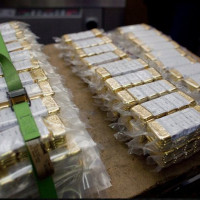
In this article we have considered aspects of the movement and legislative regulation of precious metals. They gave their recommendations for optimizing not only the logistics chain of this process, but also improving the information flow of the state in relation to legislative regulation. In this article we have considered aspects of the movement and legislative regulation of precious metals. They gave their recommendations for optimizing not only the logistics chain of this process, but also improving the information flow of the state in relation to legislative regulation. Keywords: precious stones, customs authorities, logistics, license, supply chain management, foreign economic activity, EAEU, smuggling, paperwork, precious stones, customs authorities, logistics, license, supply chain management, foreign economic activity, EAEU, smuggling, paperwork Precious metals have always been the object of close attention of states, collectors, smugglers and many others. They are gifted with this attention because they are very rare in nature. In nature, precious metals are almost always found in a free (native) state. In this regard, control over their extraction and transportation is quite often a problematic issue in many countries, and therefore a large number cannot be processed in time or encrusted in technology of global importance. The Kyrgyz Republic, being a state dominated by mountain chains, is rich in deposits of noble (precious), non-ferrous and rare metals. The mining industry is one of the leading sectors of the economy, and precious metals are of particular value to the state. No less important value is provided by the process of movement of precious metals from the point of view of logistics and economics. All cargo transportation of precious metals in the country is regulated by regulatory legal acts of the Kyrgyz Republic, where an important link is played by the Order of export from the territory of the Kyrgyz Republic and import into the territory of the Kyrgyz Republic of ores, concentrates and waste containing precious metals and related recoverable metals from September 14, 2017. Regulation and movement of precious metals are the objects of the Criminal and Administrative Code. These and other regulations regulate such logistics links in the handling of precious metals and stones as: mining; transportation and storage; processing and recycling; distribution and marketing. The cross-border movement of precious metals is of particular importance and requires close attention both from the state, represented by customs authorities, and from the participants of foreign economic activity. The movement of precious stones across the state border is subject to special state control, since the object of movement is of special value [1]. An important role in the customs clearance of goods and customs procedures is provided by the transport on which the cargo is transported. Let's consider the process of customs clearance from the moment of filing the declaration for goods (DT) to the customs authority without reference to the place of registration and without considering certain types of goods. The basis for the application of a permit document for precious stones will be: Decision of the EEC Board No. 30 dated 21.04.2015 "On Regulatory legal acts in the field of non-tariff regulation". Section 2.10 of the unified list (precious metals and commodities containing precious metals); Resolution of the Government of the Kyrgyz Republic No. 156 dated April 20, 2021 "On Approval of the List of Expert Organizations for Issuing Expert Opinions and Authorized Bodies for Issuing Permits for the Export and Import of Goods Included in the Unified List of Goods to Which Non-Tariff Regulation Measures are Applied in Trade with Third Countries, and Amendments to Some Decisions The Government of the Kyrgyz Republic in the field of non-tariff regulation"; Laws of the Kyrgyz Republic "On State regulation of foreign Trade activity", "On Licensing and Licensing system in the Kyrgyz Republic" and "On Export Control"; The final authorization document for foreign economic activity in the field of precious metals is a license issued by the Ministry of Economy and Commerce of the Kyrgyz Republic. Another necessary document is the certificate of origin. The final stage after the submission of the DT is the verification of funds for payment of customs duties. It is worth noting that from a logistical point of view, the process of registration and document management itself can significantly reduce the efficiency of the supply chain, if we consider the transportation of precious metals as one of its links. It is also important that difficulties with the transportation of precious metals arise due to the specifics of the EAEU regulatory legislation, gaps in the interpretation of a number of terms and significant differences from the international classification. In recent years, the number of offenses related to the illegal export of precious metals from the Kyrgyz Republic has sharply increased, which negatively affects this area. It is becoming increasingly important to strengthen the forms and methods of customs control of precious metals transported across the customs border of the Customs Union, the search and timely application of new technologies for the detection and identification of certain types of precious metals and precious stones in transported luggage [3]. It is important to combat the smuggling of products and other cultural values made of precious metals. This regulation could complement the technical regulations of instrument diagnostics. Summing up the results of this article, the transportation of precious metals according to the legislation of the Kyrgyz Republic was considered, touching upon other subtleties of the bureaucratic component, as well as the proposed recommendations and the expected result of these introductions, which optimizes the logistics chain at the stage of transportation, which will significantly affect these logistics operations and the exclusion of the smuggling sphere arising in the presence of precious metals. Based on the above, we can assume that the investigation of criminal cases of crimes related to the illegal (shadow) turnover of precious metals and stones requires special training of customs officers and the introduction of specialization in their training course. Simplification of license registration procedures significantly reduce the total cost of customs documentation. At this stage, a complete introduction to the electronic document management system is recommended, which will have a positive impact on all hidden aspects of customs documentation. The need for bilateral cooperation between state regulatory bodies and the business community of entrepreneurs, which will be based on the principles of openness, honesty and responsibility. Timely provision of reports on exported quantities of precious metals outside the state. It is also important to note that within the unstable economic situation in the world, monitoring of the legislative regulation of precious metals is necessary. This contributes to a timely solution and more efficient construction of the supply chain. List of literature Kalyabina K.I. Movement of precious stones across the customs border // In the collection: Current issues of education and science. Collection of scientific papers based on the materials of the international scientific and practical conference. - 2018. – pp. 72-74 Tarasova N.A., Bezrukova O.A. Improving the mechanism and procedure for the movement of precious metals and precious stones across the customs border of the Customs Union // In the book: Regions of the EAEU countries in the conditions of modern transformations. Collection of materials of the international scientific and practical conference. Responsible editor V.I. Tarasov. – 2017. – pp. 79-85. http://mineconom.gov.kg/ru - Website of the Ministry of Economy and Commerce. https://online.zakon.kz/Document/?doc_id=32462876&pos=3;-106#pos=3;-106 https://metalspace.ru/education-career/education/referat/645-blagorodnye-metally.html
GA
Goloshchapova Anastasia
Research
4401 | 0 | 41
Comparative analysis Public Procurement Law (PPL) the Kyrgyz Republic and the Agreement on Government Procurement of the World Trade Organization (GPA WTO)
At the end of 2021, procuring entities signed about 8.538 contracts for a total amount of more than 5 billion dollars and with a wide variety of goods, works and services. Public procurement plays a key role in the "National Development Strategy of the Kyrgyz Republic for 2018-2040" as one of the market-based tools for achieving smart, sustainable and inclusive growth with the most efficient use of public funds. Regulation public procurement should be modernized for broad participation in the procurement of representatives of small and medium businesses in order to mitigate unemployment and increase employment in the country. However, despite the increase in the volume of public procurement of goods, works and services, the savings of public funds after the procurement procedures in 2021 fell down by more than 38%. Given the above, it can be argued that the existing legal regulatory in the of public procurement, unfortunately, are ineffective sufficiently, especially in terms of covering the entire volume of goods, works and services procured by the government for public needs. To present date, 3240 procuring entities and 9510 suppliers registered on the portal of the public procurement website. According to the statistics of 2021, the most frequently used method "Direct contract" amounted to 41% among all procurement methods. I believe that this is a large percentage for this method and allows us to think about the imperfection of the procurement methods proposed in the PPL. It can also be assumed that this is the result of a trend in recent periods: state-owned enterprises and joint-stock companies with a state share did not begin to apply the PPL, attempts to ignore or not apply the PPL under various pretexts are intensifying, very often and in large volumes, goods, works and services are procured by the method “Direct contract” instead of open competitive bidding. In my final paper, the objects of analysis are: Public Procurement Law of the Kyrgyz Republic (Edition 14.04.22)Agreement on Government Procurement of the World Trade Organization (GPA WTO) (2012) The area of analysis “Legal, Regulatory and Policy Framework” implies a reliable system for conducting public tender procedures in a transparent and fair environment for all parties. The following criteria are included in the Legal and Regulatory Framework area of analysis: Scope of application and coverage of the regulatory frameworkProcurement methodsProcurement processSustainable public procurement Author: Goloshchapova Anastasia, Bachelor of the International School of Logistics and Public Procurement at the Kyrgyz State Technical University. The full text of the final paper can be downloaded from the link:
Kalieva Ayan Askatovna
Research
3442 | 0 | 14
Procurement logistics: the impact of supplier selection on the efficiency of the supply chain
International procurement practice shows that companies that accept the logistics concept and build their strategy on its basis have the best indicator, reflecting the ratio of profit received from the sale of goods or services to the invested capital. Procurement logistics affects the costs associated with the sale of the organization's finished products. The policy of government procurement can contribute to solution key tasks of priority directions the national socio-economic policy. For example, support for small and medium enterprises, certain regions, sensitive groups of the population, environmental protection. At the same time, the objectives of economic policy may not always be consistent with rational guidelines for the management of government contracts, which mainly include ensuring competition through tendering and procuring goods with the best price-quality ratio. Thus, the policy of supporting national suppliers through price preferences violates these principles, but can be justified from the point of view of industrial policy. With regard to foreign suppliers, each country establishes an access regime, which often has significant restrictions. In an environment where import tariff rates have been significantly reduced and continue to decline, public procurement remains one of the key impetuses for further liberalization of international trade. Thus, two opposite trends are currently developing in the field of foreign trade regulation of the state order sphere - protectionism and liberalization of access for foreign companies. The latter is expressed not only in the formation and development of regulatory instruments at the multilateral level within the framework of the WTO Public Procurement Agreement, but also in the penetration of similar processes at the regional level due to the need to identify and use additional sources of growth and intensify foreign economic cooperation. The first trend is expressed in the fact that many countries use public procurement as a non-tariff barrier in international trade. Author: bachelor student Kalieva Ayan Askatovna Scientific adviser: Prof. Umetaliev A.S. Full text of the final paper
Beck Victoria
Research
5122 | 0
Improvement of modern logistics in the field of tourism
Abstract: this article discusses the improvement of modern logistics in the field of tourism. Keywords: logistics, tourism, transport, route. Currently, the development of logistics processes and technologies has covered various areas of production, economic, social and economic activities, as well as the use of logistics in the field of tourism product circulation. It should be noted that tourism should be approached as a separate large and independent economic complex of the national economy, since this sphere unites different industries, covering a certain wide space that includes enterprises and firms of various industries. Tourists, in turn, fall into the role of buyers, where everyone strives to satisfy all their needs during their holidays by virtue of their capabilities. Paying for services, goods and various tourist works, the demand for travel by tourists is formed and, therefore, the industry itself is financed in this way. In the context of growing globalization, the world tourism industry is of priority interest and great prospects for the Kyrgyz Republic. Using the unique potential of nature and cultural heritage of Kyrgyzstan, it is necessary to integrate harmoniously into the tourism industry of the world economy and achieve intensive development of tourism in the republic, ensuring steady growth of employment and income of the population, stimulating the development of tourism-related industries and increasing the inflow of foreign investment into the economy. The steady growth of the influence of tourism both on the world economy as a whole and on the economy of individual countries and regions is one of the most significant, permanent and long-term trends that accompanies the formation and development of the world economy. It is becoming obvious that tourism is becoming a large independent branch of the national economy, whose activities are aimed at meeting the specific needs of the population. The diversity of these needs is met not only by tourism enterprises, but also by enterprises of other industries, which determines the importance of tourism as one of the factors of multiplicative impact on the development of the economy. Tourism is one of the factors of global integration processes, and the tourism business is now becoming a significant sector of the economy. The Kyrgyz Republic has the necessary initial prerequisites for the development of a viable tourism industry. Today, when widespread interest in untouched places and adventure tourism is growing in the world, Kyrgyzstan can take a worthy place in the world tourism market. The Kyrgyz Republic is located in the center of Eurasia, at the junction of promising aviation, transport and economic arteries between Europe and Asia, North and South. The main task in this area is to make the republic accessible to foreign tourists by establishing direct international air links, for which it is necessary to carry out a number of measures, including: to create conditions for the functioning of competitive airlines in the air transportation market, to improve flight safety and the quality of passenger service. In tourism, logistics is understood as: the organization of the movement of tourist flows on the basis of competent management of material and information flows; rational organization of the development of a new product and its distribution. The task of logistics is to minimize the costs of bringing the product to the consumer. At the same time, much attention should be paid to advertising logistics. It is necessary to clearly identify the areas of advertising activity, priority advertising methods, marketing research based on statistical data. All systems should work to reduce costs and ensure the quality of tourist products. For the best functioning of logistics in the company, a system of specific questions is used in each situation, i.e. certain tasks are set. In addition to the above, logistics links the tasks of quality and safety with legal responsibility. When performing any task set by the firm, there is a constant process of linking this task with the legal basis. The logistics system (LS) of a travel company is an adaptive system in which the elements are the divisions of the enterprise that perform the functions of optimizing the movement of service flows and the flow of tourists. One of the main ways of intensive development of domestic and inbound tourism is to improve the quality of service in the practical activities of all organizations of the tourism industry. The Kyrgyz Republic is located in the center of Eurasia, at the junction of promising aviation, transport and economic arteries between Europe and Asia, North and South. The main task in this area is to make the republic accessible to foreign tourists by establishing direct international air links, for which it is necessary to carry out a number of measures, including: to create conditions for the functioning of competitive airlines in the air transportation market, to improve flight safety and the quality of passenger service. To ensure a high quality of tourist service, it is necessary to equip these highways accordingly, improve the quality of the roadway, increase the safety of highways, equip the routes with signs and information boards in foreign languages, etc. The construction of essential road service facilities (roadside hotels, paid parking lots, catering facilities and other recreation and entertainment facilities) is of great importance. To date, the expansion of the tourism sector directly depends on the use of logistics technologies that minimize transport costs, deliver passengers and cargo on time and safely, and minimize damage en route. It should be noted that tourism should be approached as a separate large and independent economic complex of the national economy, since this sphere unites different industries, covering a certain wide space that includes enterprises and firms of various industries. Tourists, in turn, fall into the role of buyers, where everyone strives to satisfy all their needs during their holidays by virtue of their capabilities. Paying for services, goods and various tourist works, the demand for travel by tourists is formed and, therefore, the industry itself is financed in this way. As for tourism within the country, one of the urgent problems is the provision of the transport component. This problem applies to air traffic, rail, as well as automobile traffic and road construction. Due to the low level of organization of air flows within the country, which in comparison with international transportation is one of the main factors that limits the development of tourism in the regions of the country. Solving these problems will attach great importance to the development of tourism within the country. List of used literature: https://moluch.ru/conf/econ/archive/134/ Yankovenko V.A. "Logistics in tourism".Konchenkova A.I. "Science today: theoretical and practical aspects".
Cholponkul kyzy Akmaral
Research
4368 | 0
The criterion of competence of public procurement specialists
Annotation: this article discusses the criterion of competence and qualification requirements for a specialist in the field of public procurement. Keywords: public procurement, procurement of goods, works, services, specialist, state and municipal needs, qualification, professional competence, training, training. Introduction. Public procurement is an important area of economic activity where significant amounts of consolidated budget funds are spent . This type of activity requires a procurement specialist to have versatile knowledge and competencies in various fields of activity - macro and microeconomics , marketing , law ( including the provisions of legislation on the supply of goods , the performance of works , the provision of services that are the subject of a tender or other type of procurement procedure and the basics of labor legislation ). A public procurement specialist should have the skills and be able to draw up annual procurement plans, prepare procurement assignments or competitive lists, depending on the type of procurement procedure, negotiate, organize and conduct pre-contractual and claim work, tenders, and conclude contracts. Participation in public procurement involves the ability to work freely on the official website and electronic trading platforms . Qualification characteristics of the position of the employee " Public Procurement Specialist in the Republic of Kyrgyzstan was developed in accordance with the requirements for conducting public procurement procedures for goods ( works , services ) on a competitive basis , established by Decree of the President of the Republic of Kyrgyzstan dated April 3 , 2015 No. 72 " On Public procurement " The criteria for the competence of a specialist in the subject area of the standard include the necessary professional training, a sufficient level of knowledge and practical skills. In turn, the necessary professional training includes the availability of higher education, experience in scientific and practical activities, the mandatory availability of a document on retraining or advanced training in the field of public procurement. Verification of compliance with the criterion of necessary professional training is carried out on the basis of the documents submitted by the applicant. By testing, interviewing and preparing draft documents in accordance with the task, the level of knowledge and practical skills of the applicant is checked. Based on the verification of compliance with the standard of competence of specialists in the field of procurement, applicants are awarded quality certificates in one of two subject areas: procurement for state and municipal needs;procurement by certain types of legal entities. The main objective of the professional activity of a specialist in the field of public procurement should be to increase the efficiency of the use of budget funds in procurement, the quality of goods, works and services provided for public needs, professional level, competitiveness and motivation of personnel. In accordance with the requirements of the professional standard, training of specialists should be carried out at all levels of professional training, namely in the system of secondary vocational and higher education, in order to meet the need for positions and jobs of different skill levels. A specialist in the field of public procurement must possess: knowledge of the regulatory and legal regulation of procurement activities;skills in planning, organizing, implementing and controlling purchases, as well as evaluating the effectiveness of procurement activities;experience in performing professional functions: preparation of procurement documentation, monitoring, examination of goods, documents, etc. The demand of the market for the training of specialists in the field of public procurement creates the need to train qualified teaching staff with the necessary level of qualification and competence. Conclusion Based on the above, it can be argued that the field of public procurement needs qualified personnel. Specialists in this field are obliged to maintain and improve the level of their qualifications and professional education by studying at advanced training courses or professional retraining. This may be an incentive to develop and offer an appropriate educational product – an educational program. The educational training program of a specialist in the field of public procurement must meet the established requirements of the educational and professional standard.
Azhibaev Elaman Erkinovich
3277 | 0
Warehouse management, handling and storage
Annotation. This article will focus on managing the logistics process in a warehouse. The logistics process in the warehouse is complex and involves high labor and cost. It requires full coordination of the functions of supplying stocks, handling cargo and fulfilling orders. The efficiency and reliability of the functioning of the enterprise, acting as an integrated element of the system, depends on the accurate work of the warehouse. A special place should be given to solving the main problems of the unit in order to optimize costs. Analysis of the efficiency of the warehousing should be carried out with the help of estimated indicators, paying attention to the storage potential. Keywords: management, warehouse, costs, enterprises, cargo flow, warehouse systems, logistics systems. The organization of the warehouse economy and its improvement is a complex task that contains a large number of variables represented by different participants in the processes that occur during the activities of the warehouse economy, the efficiency of which depends on the efficiency and well-being of the entire warehouse economy. Therefore, first of all, it is necessary to optimize the activities of participants in the warehouse process to achieve their goals, as well as their use of the warehouse infrastructure. The right approach to the warehouse, not only as a room, will reduce production costs: transport, financial, human, temporary, which can definitely increase profitability. Having a reliable warehouse management system is essential for the success of manufacturers. There are four tools that will help optimize the warehouse management system: Warehouse layoutAutomatic re-order pointsSupply Chain ManagementBarcode scanning All these things build on each other to create an environment in which producers can thrive. Warehouse layout. One of the biggest delays in the production process is often the amount of time it takes to collect all the raw materials and supplies scattered throughout the warehouse. Everything in the specification must be at hand and ready to work in order to start production of a certain product. Therefore, if it is possible to reduce the number of man-hours spent on collecting orders, you can really increase your efficiency. Tools for optimizing production warehouse management: Change the layout of the warehouse so that goods that are often used together are located next to each other in the same aisle and on the same shelf. Keep in mind that not every combination will be obvious (for example, nails and wooden boards). Some of them can be quite anachronistic (for example, French fries and ice cream). A computerized warehouse management system will help to uncover these combinations. Place frequently used items closer to the work area and the receiving compartment. This saves time both on acceptance and on production. Map out your picking path on a barcode scanner or other mobile device so that you can go through your warehouse once, and so that you don't have to go back and perform the same rounds over and over again. Automatic re-order points. A well—planned warehouse layout is a great idea, but it won't do much good if that warehouse doesn't have the necessary number of parts to facilitate production. Having too few items in stock will lead to shortages and delays, and having too many will lead to unreasonably high storage costs and a cramped and cluttered warehouse. Automatic re-order points are useful tools to maintain stock balance in each warehouse. When the quantity of a certain item in the inventory reaches a low level, the warehouse management system notifies that it is time to re-order this item. If there is a really good system, it can even suggest the right quantity for a repeat order based on historical sales trends, lead times and other data. Supply chain management. Just as the efficiency of the warehouse layout depends on the availability of the necessary inventory, automatic re-order points assume the presence of a supply chain management system. It is important for manufacturers to maintain good relations with their suppliers or consumers. Getting favorable payment terms can have a big impact on cash flow. In addition, they should monitor the performance of their suppliers over time to see if the supplier receives orders accurately and on time. A good way to keep track of all this is to use a warehouse management system that allows you to track the movement of products, integrate with your accounting solution, and set default suppliers for all your parts and products. Barcode scanning I briefly mentioned barcode scanners in the section "Warehouse Layout", and now let's delve into why these tools are so important in production. A small barcode scanner does two big things: Increase efficiencyReduce the number of errors Scanning barcodes to select materials, re-order goods and receive goods to the warehouse significantly speeds up these processes than trying to print them manually or write them on a piece of paper. Warehouse workers can do much more in the same time if they are not bound by outdated methods. In addition, they avoid a lot of potentially costly data entry errors. Even the best typist makes typos on the keyboard from time to time. Specifying just one wrong digit in the identification number or quantity of the product can have disastrous consequences. Barcode scanners minimize these typos by automatically filling in the correct information when scanning the barcode. There is very little input, and the information is instantly updated in the warehouse management system, so every worker and manager can stay on the same page. A warehouse management system is a means by which manufacturers track their inventory. It should contain four key elements to maximize the use of the manufacturer's resources: Warehouse layoutAutomatic re-order pointsSupply Chain ManagementBarcode scanning Conclusion: Planning and maintaining a warehouse management system using excellent layout, automatic re-order points, supply chains and barcode scanners is a great boon for production. These tools allow you to move faster, save money and ensure the accuracy of inventory data at every stage of production. List of literature Grigoriev, M.N. Inventory management in logistics / M.N.Grigoriev, A.P. Dolgov, S.A. Uvarov. - St. Petersburg: Publishing house "Business Press", 2006. Kanke A.A. Logistics: textbook / A.A. Kanke, I.P. Koshevaya I. P. - 2nd ed. ispr. and add. - M.: ID Forum: INFRA-M, 2007. Logistics. Textbook / Edited by B. A. Anikin, 3rd ed., reprint. and additional - M.: INFRA-M, 2008. Grigan A.M. Educational and methodological complex of the discipline "Logistics".- Rostov-on-Don: UPL SFU, 2010. Fikhman, Yu.N. Quality management system at an industrial enterprise (according to ISO 9001:2000 standard): manual on system development / Yu.N. Fikhman. - M.: LLC "NTK "Track", 2005. Levanov A.S., 2016 Dmitry Ivanov, Supply Chain Management 2016 https://buhta.ru/sistema-upravleniya-skladom-wms https://www.ekam.ru/blogs/pos/metody-upravleniya-zapasami-na-sklade https://lsconsulting.ru/avtomatizaciya-sklada Azhibaev Elaman Erkinovich, student, I.Razzakov Kyrgyz State Technical University, 66 Ch.Aitmatov Ave., Bishkek, 720044, Kyrgyz Republic. Mukhtarbekova Rasita Mukhtarbekovna, teacher, I.Razzakov Kyrgyz State Technical University, 720044, 66 Ch.Aitmatov Ave., Bishkek, Kyrgyz Republic.